Jude Law and Carrie Coon give towering performances in The Nest, in theaters today. A silver-tongued financier with a “fake it til you make” it attitude towards household finances, Rory (Law) moves his family—son, stepdaughter, and Allison (Coon), bristling at the confines of the “subservient housewife” role she’s attempting to fill—to a manor house outside London, where the comfortable fictions the pair of them have built about their life together come tumbling down. Written and directed by Martha Marcy May Marlene‘s Sean Durkin, The Nest uses some of the tone and aesthetics of the haunted house genre to explore a family tormented, not by ghosts, but by its own failings to live up to the crushing expectations they’ve pushed upon themselves. Shortly before its theatrical bow courtesy of IFC Films, Durkin spoke with Boxoffice Pro about the film’s period setting, visual style, and shoulderpads.
Congratulations on the film. I really enjoyed it, even though I will say it isn’t the best film to watch mood-wise when you’re trapped in your house and you feel like your life is slipping away from you.
[laughs] Thank you!
At what point did Carrie and Jude come to be cast?
We shot in the fall of 2018. I guess about six months before we shot, I sent the script to both of them. I’d known Carrie a little bit through friends. We’d met a couple times. My casting director, Susan Shopmaker, and I work closely together. We were talking about people, and then once Susan said Carrie, it all clicked. “Of course. Of course it’s Carrie.” So I sent it to her, and she responded. I knew we needed somebody who could capture that duality. Allison is very clearly more than one thing. She typically, maybe, would be divided into two characters, in a way. I needed someone who could be believable to bring those two parts of the character together as one cohesive person and do it with real power and subtlety. She’s just incredible.
Jude, I sent the script to. He was in LA and responded, and we met. And from from day one, we were asking the same question, which is: “Rory does things that don’t seem like the best things for the family, but he genuinely believes they are.” And so what we talked about from day one was how we find that heart and that warmth underneath Rory. So no matter what he does, he’s always doing it with love. Jude, for me, has so much love and such a big heart.
Rory’s not just being dishonest to other people in his life. He’s being dishonest to himself, first and foremost.
Exactly. He’s not being truthful with himself. Neither of them are, and that’s what I wanted the film to be about. How do they get to a point of admitting a truth to themselves?
Allison is such a great character—her battling between the housewife box and her own inner power. It’s a mix of strength and vulnerability that she she did so well in “The Leftovers.”
Yeah. It’s also why I wanted to set the movie [during the ‘80s]. These themes run through life no matter what time period it is. I wanted to study two people who were from a post-War parenting generation that were given these societal dreams that they were chasing. There were these things put on them by their families and where they came from. They’re caught between these two worlds. And I thought that time period was a great way to explore those values and ask: Are these values mine? Where do they come from? And Allison is such a complex [example] of that. Because it makes no sense that she would assume [the subservient housewife] role, on some level. Because she’s so outspoken and so strong. I think that life is complicated and people are complicated. And so I wanted to tap into that.
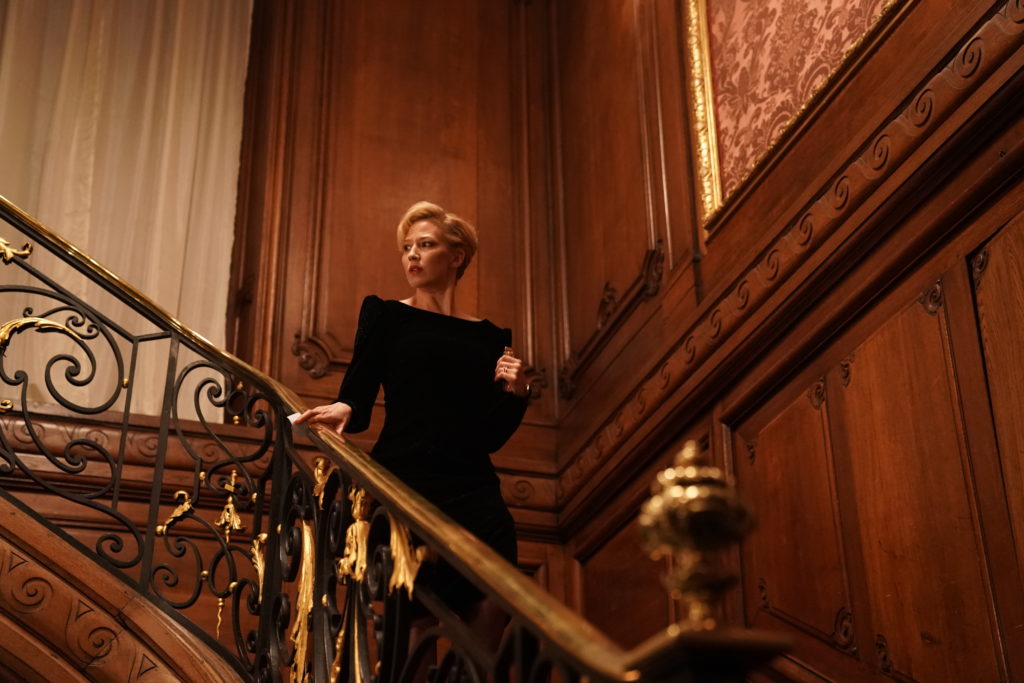
Once you’d cast Carrie and Jude, did that change the characters at all, or the dynamic between them? Or did they pretty much fit the vision you were working with?
By the time they got the script, it was pretty finished.They said they felt it was there on the page. The thing I always say is that when I hand over a script to an actor, it’s like a handing over of the character. I always want them to bring their own experience, their own inspiration, to mold some of the details. I like to be really open about that, and both [Jude and Carrie] are so creative in the details.
So it was very much there, but they both brought their individuality to it. And their chemistry was fantastic. We didn’t do that much prep. I think we spent a day together, the three of us. We met in New York, and we went out for lunch. It was really just that. It was spending a bit of time and building that trust. And we felt that right away. We were all there to give it our all. Everyone was passionate about it and wanted to be a bit ugly at times. Not be afraid to be ugly and say terrible things to each other and get into the messiness of being in a marriage and being human.
The dishonesty and the pettiness and the bitterness.
And also the passion and attraction. I really wanted to make something about a couple who are attracted to each other. I think you feel that in the film. You see a spark between them, at times, where you get why they’re together. There’s an energy to them. And that’s something I think you don’t see a lot: a married couple who might fight like crazy, but they’re also into each other. That was something that was really important, that we talked about from the very beginning.
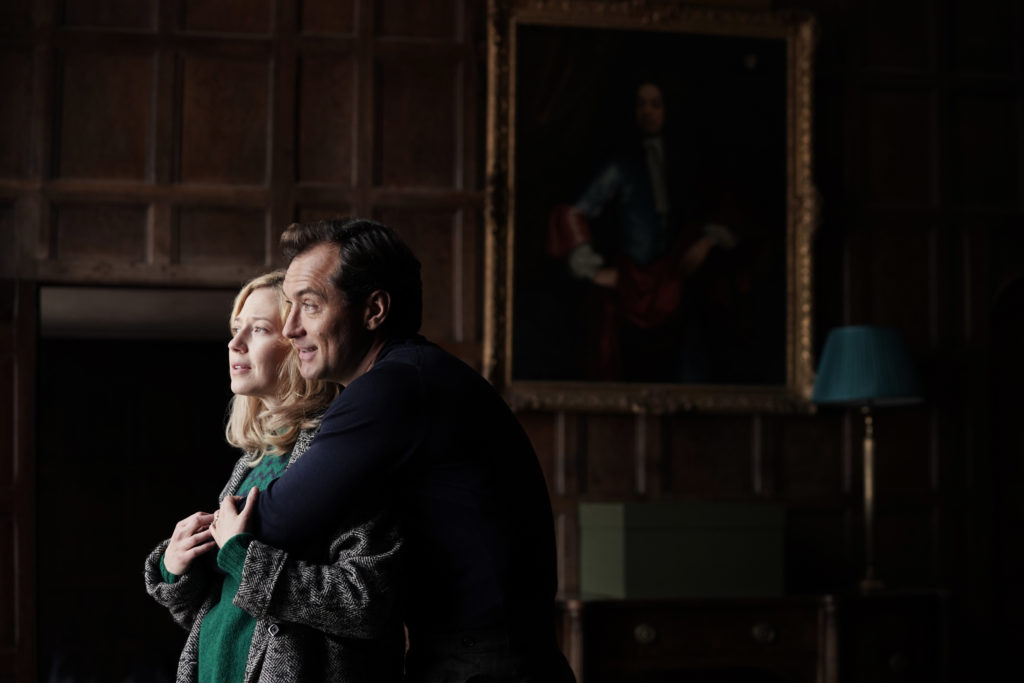
I’d like to talk a bit about the look of the film—you have a real duality, just like you do with the characters. It almost feels warm and cold and claustrophobic and distancing at the same time.
I always try to approach each scene to get the best out of that scene in that moment. I don’t think too much on a macro level. I’m not calculated in that sense. But I think in the end, you do end up having a more specific feel than is intended.
In terms of the distances, I’m always very specific about when to be close and when to be far. I think Rory only gets two extreme close ups in the film. One is the introduction to him, in the beginning. And then one is the revelation at the end. And in between, I wanted to drift between being close to him—being with him—and being farther away. But oftentimes that, for me, is more about space and how people inhabit their space. The space that they’re in, whether it is the coziness of their American home or the grand coldness of their English home, which still has a warmth [in its] tone—it’s really important to see people in their in their world and their landscape. Or Rory walking through empty London streets, because he’s the first to work and he has this drive.
Space is really important to me, and seeing people in their environment is really important to me. I think we get used to seeing characters at a certain distance, especially on TV. We get used to this language, but actually we don’t often often need to be that close. And I don’t see that as being cold or distant, either. I think seeing someone in their environment, being as close as you need to be, can tell you as much as if you are absolutely up close. And so it’s always about the balance for me and doing what’s the right emotional beat for that scene and giving the right distance for the actor to do their thing.
The scenes set in that big manor house—the characters feel overwhelmed by it. It almost feels like it’s going to crash in on them.
It’s trying to give a sense that, even though the first house [they live in, before they move] is smaller and much closer, it’s much less claustrophobic than the giant house. You can’t escape it. So even though there’s more space, and you’re wider a lot in the big house—this idea of crashing down is really good. It’s keeping them locked in.
It almost feels like a haunted house movie, but the ghost is aspirational, ‘80s Yuppiedom.
It’s absolutely what I wanted—to use the elements of a haunting and cinematic language of that to embody what they’re going through emotionally. And also, spending time in these kinds of houses, they are just scary. There doesn’t need to be a ghost. There doesn’t need to be a reason. They just are. This house is 700 years old. You step in, and there’s an atmosphere that has nothing to do with the supernatural. You’ve got 700 years of people living in there. It’s old, and it changes size. It literally expands and contracts over the course of the day. It is constantly making noises. Doors that close in the morning don’t close an afternoon and then close again at night. It’s amazing how alive it is. I don’t think there’s really space to explain that in a movie—or in this movie, I should say—but I certainly wanted to try and embrace that feel, even though it wasn’t a movie about a haunting.
What were the conversations you had with your costume designer?
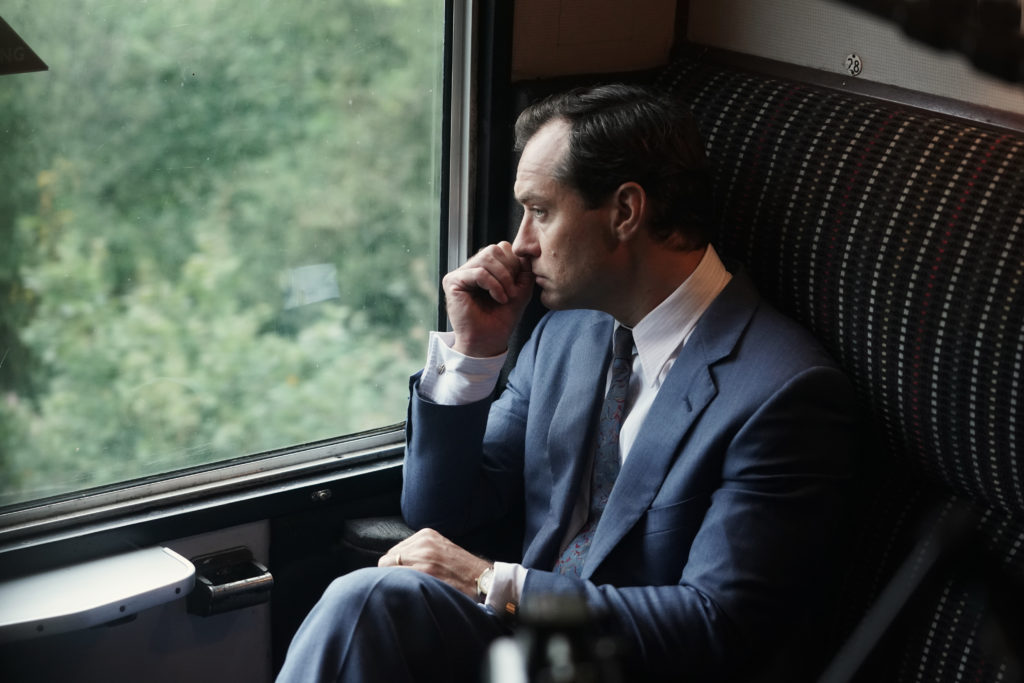
This is really, really crucial, actually. I said to everyone on costume or makeup: When people make movies about the ‘80s, they have too much fun. They bask in the joke of it. When really, you look back at the references, and it doesn’t look that different from today. I wanted it to be completely accurate, yes, but almost not noticeable until there are key things that are you can’t [avoid]—computers, telephones, those things. The costume designer, Matt Price, and I had amazing conversations upfront about that subtlety and about making sure it was accurate without ever tipping into an area [that’s] too much of an indicator. Even Jude’s suits—we had them cut by this amazing tailor that Matt knew in London, and they were totally accurate to the time. It was old-school guys, and they’d been there for 50 years and knew the time period. Decisions about shoulder pads—we went with the smaller version of the shoulder pads. Things like that. We’re so used to seeing ‘80s [movies where the costumes have] full shoulder pads. They were accurate, but we took the least exaggerated version of them.
The post Sean Durkin Returns to the Big Screen with <em>The Nest</eM> appeared first on Boxoffice.
from Boxoffice
Komentar
Posting Komentar